Mobile RV Service — D'Iberville, MS & Gulf Coast
Thomas is a NRVTA-certified RV technician. Insured, honest, and RV-specific — not a handyman. We roll to you anywhere within 1.5 hours of D'Iberville, MS.
Our Work In Action


Why Trust Us
Thomas is a NRVTA-certified RV technician — real, factory-level training specifically for RVs. Not a handyman with a toolbox, not a car mechanic guessing. We come to your campsite, storage lot, driveway, or RV park. No towing, no shop wait, no guesswork.
Comprehensive RV systems training — electrical, plumbing, HVAC, appliances, and structural.
Proper solar sizing, installation, and battery system design for off-grid living.
Onan, Generac, and other RV generator diagnosis, service, and repair.
Licensed, insured, and equipped to come to you within 1.5 hours of D'Iberville, MS.
What We Fix
From routine maintenance to complex electrical faults — if it lives in your RV, Thomas can service it.
12V DC and 120V AC diagnosis, breaker panels, shore power issues, converter/inverter troubleshooting, wiring repairs, and safety inspections.
Solar panel installation, battery bank design, charge controller programming, and full off-grid system builds.
Onan, Generac & other RV generators. Oil changes, tune-ups, carburetor cleaning, load testing, and diagnosis.
Rooftop AC diagnosis and repair, furnace troubleshooting, heat pump service, duct inspection, thermostat issues.
Refrigerators, water heaters, microwaves, slide-out motors, leveling jacks, and LP/propane system service.
Seasonal maintenance checks, roof sealing, seal inspections, battery testing, and new-owner walk-throughs.
Featured Service
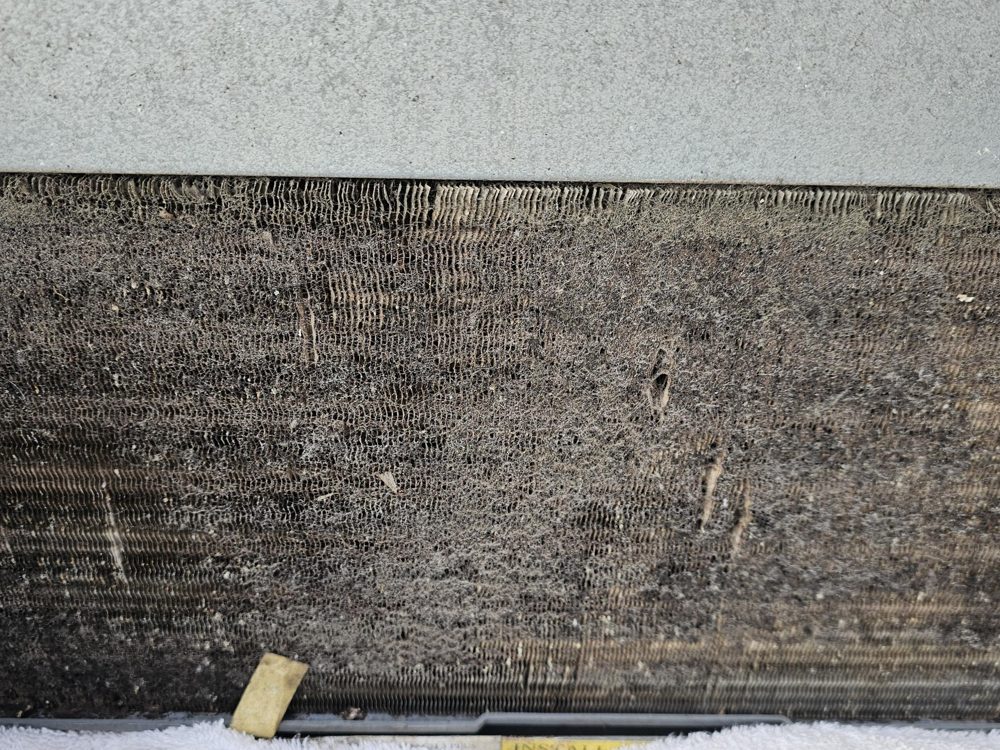
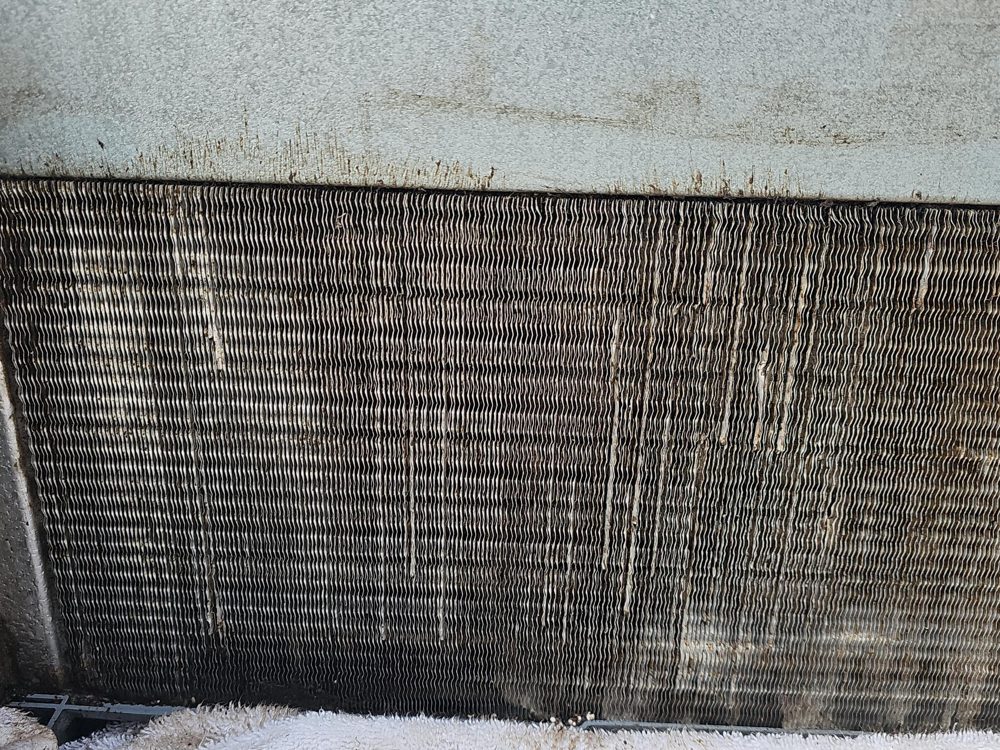
Your rooftop AC works harder than almost anything else on your rig — and a dirty coil is one of the most common (and most overlooked) reasons for weak cooling. Here's why it matters:
Rooftop AC coils we cleaned: clogged with dust and lint on the left, open and clean on the right.
RV Owner Digital Shop
Built by a certified RV tech. Diagnose it yourself before you pay for a service call — or know exactly what to say when you do.


Self-guided diagnostic tool covering electrical, plumbing, AC, and appliance issues — figure out what's wrong before you call anyone. Plus a built-in RV Journal to keep everything in one place:

Step-by-step guide to diagnosing 12V/120V issues, breaker trips, converter and inverter problems.

Diagnose leaks, low water pressure, water heater issues, and tank sensor problems on your own.

Why your AC runs but doesn't cool, strange noises decoded, and what's DIY vs. what needs a tech.

A practical guide for new and future RV owners — what to check before you buy and what to do after you bring it home.

Keep a clean record of every service, repair, and inspection — handy for staying on schedule and for resale value.

Living in it or storing it: step-by-step checklists for winter prep and spring startup. Air blow-out method, plain English.
All six digital books in one purchase — electrical, plumbing, AC, the buying guide, the maintenance logbook, and winterizing.
Everything in one purchase: all six digital books plus the RV Rescue PRO diagnostic app.
Printable at-a-glance charts: watts, 30A vs 50A, battery disconnect and winterizing checklists.
Our Promise
We explain what's wrong in plain English before starting any work. You decide what gets fixed and when.
We give you an estimate before we start. No surprise bills, no creeping hourly rates.
Stuck at a campsite? We respond fast. Call or text and we'll get you back on the road.
Real training in RV service, solar systems, and generators — not a guess.
No towing, no drop-offs, no shop wait. We bring the tools to your driveway or campsite.
Questions before you book? Call or text — no charge for the conversation.
Where We Serve
Based in D'Iberville, MS, traveling up to 1.5 hours to serve RV owners across the Gulf Coast region — campsites, driveways, RV parks, wherever your RV sits.
Straight From Our Customers
"Outstanding service! Completed multiple warranty repairs. Neat, organized, friendly. I'd highly recommend them!"
"Tom shows up when he says he will, knows RV repair, and doesn't guess about what you need. Glad we found him for our solar issue."
"Great quick service. Arrived to diagnose within an hour and a half. Great husband and wife team — with you until the problem is fixed."
"The best in value and knowledge — definitely my go-to person. Highly recommend."
One call books it all — repairs or AC coil cleaning.
254-493-9322Free RV Charts
Sign up and we'll send you the free charts (watts, 30A vs 50A, battery disconnect, winterizing checklists) plus 15% off your first book or app.
Get In Touch
Fill out the form below and we'll get back to you within one business day. For urgent needs, call or text us directly at 254-493-9322.
Free RV Know-How
Written by a certified RV tech. Learn how your rig works, spot problems early, and know when to call a pro.
A tripped breaker is your RV telling you a circuit is pulling more power than it's rated for — it's not usually a sign something's broken, just overloaded. The good news is most of the time you can figure out which circuit and why in a few minutes.
If a breaker trips again within a few minutes — even with nothing plugged in — that points to a wiring fault or a failing breaker itself, not an overload. That's when it's time to stop resetting it and call a tech, since repeated tripping with no load is one of the more common early signs of a wiring issue that's worth catching early.
Most RVs actually run on two separate battery systems, and mixing them up is one of the most common sources of confusion for new owners.
The chassis battery starts your engine (motorhomes only — travel trailers and 5th wheels don't have one). The house battery bank runs everything else: lights, water pump, fans, and your fridge's control board. They're isolated from each other on purpose, so a dead house battery shouldn't leave you unable to start the engine.
If your battery is dead every morning even after a full charge the day before, that's usually a parasitic draw somewhere — worth testing with a multimeter before you assume the battery itself is bad.
Not every campground pedestal is wired correctly, and plugging into a bad one can damage your RV's electrical system fast. Testing it before you connect takes about five minutes and can save you a very expensive repair.
Lights work but the AC won't start, or half your outlets are dead — that's often a single blown leg on a 50-amp connection rather than a problem with your RV at all. A good surge protector with a digital readout will show you voltage on both legs and make this obvious in seconds.
Solar gets marketed as the answer to everything, but it's not the right fit for every RV owner — here's an honest look before you spend $1,000–$5,000+ on a setup.
The right first question isn't "how much solar do I need" — it's "how am I actually using power when I'm not plugged in." That answer determines whether solar pays for itself or sits underused.
A basic multimeter costs less than a service call and can diagnose the majority of common RV electrical issues yourself, before you ever need to call a tech.
Set your meter to DC voltage, touch the red lead to the battery's positive terminal and black to negative. Under 12.2V means your battery is getting low; under 12V means it needs a charge soon. This single test rules out "dead battery" as the cause of almost any electrical complaint in under a minute.
Your AC turns on, the fan runs, but the air coming out isn't cold — this is one of the most common calls we get, and it's usually one of a handful of causes.
Cleaning the coil and filter is safe and easy to do yourself. If you've ruled those out and it's still not cooling, especially if you hear humming without the compressor engaging, that's a capacitor or compressor issue — worth having a tech check before you run it further and risk more damage.
RV furnaces run on propane but need a 12V DC electrical connection to ignite — so a "furnace" problem is often actually a battery or fuse problem. Work through these in order:
Not all RV AC systems cool the same way, and knowing which type you have changes how you maintain it and troubleshoot problems.
Air travels through ceiling ductwork to vents throughout the RV. These give more even cooling but airflow can be reduced by dirty ducts or a clogged central filter — worth checking if some rooms feel cooler than others.
Air blows directly down from the unit itself, right below the roof AC. Simpler, fewer failure points, but cooling is more concentrated near the unit and weaker further away.
You can usually tell which you have by looking at your ceiling: visible vents running through the RV mean ducted; one central grille under the AC unit itself means non-ducted. This matters most when something's not cooling evenly — ducted systems have more places for a blockage to hide.
Mississippi and Gulf Coast summers push RV AC systems harder than almost anywhere else in the country — high heat and high humidity together mean your AC is fighting two battles at once.
If your AC seems to run constantly without ever quite catching up on a 95°F, high-humidity day, that's often normal for the climate — but if it was fine last summer and struggling now, that's usually a maintenance issue, not just the weather.
Every RV AC has a normal operating hum — but certain sounds are your unit telling you something's wrong before it fails completely.
Grinding, squealing, or a burning smell means turn it off and don't run it again until it's inspected — continuing to run a unit with a failing motor or electrical fault risks turning a simple repair into a full unit replacement.
When outlets go dead, it is usually a tripped protection device, not a wiring disaster. Work from the outside in, and stop if anything smells hot or burnt.
If a breaker trips again right away, stop resetting it. Never tape a damaged cord or put in a bigger fuse. Those are tech calls.
🎬 Prefer to watch? Find the video on our YouTube channel.
📖 Want the full step-by-step? See Book 1: RV Electrical Troubleshooting on Amazon, or grab the PDF in the shop.
A 30 amp RV has a 3-prong plug and about 3,600 watts available. A 50 amp RV has a 4-prong plug and two 120V legs, about 12,000 watts in total. That is why a 50 amp rig can run two air conditioners plus other appliances while a 30 amp rig has to juggle.
Our free 30 Amp vs 50 Amp cheat sheet puts this on one page.
📖 Want the full step-by-step? See Book 1: RV Electrical Troubleshooting on Amazon, or grab the PDF in the shop.
Short answer: leave it ON while you are using the RV on shore power. On most RVs the battery disconnect switch controls all 12V power, and that stays true even when you are plugged in.

If you are storing the RV, fully charge the battery first, then use a smart maintenance charger, or remove the battery to a heated space.
Where the switch is and how it is wired varies by RV, so check your owner’s manual and label yours. In our service calls, a switch left OFF is one of the easiest fixes there is, and it has saved a lot of people a service call.
If the 12V side is dead and the disconnect is ON, check the converter lights and fuse next.
📖 Want the full step-by-step? See Book 1: RV Electrical Troubleshooting on Amazon, or grab the PDF in the shop.
Weak flow is almost always a restriction or a supply problem, not a broken fixture. Find out whether it affects every faucet or just one.
If the pump runs but flow is weak, listen for air sputtering from the faucets. That points to a leak or a low tank.
🎬 Prefer to watch? Find the video on our YouTube channel.
📖 Want the full step-by-step? See Book 2: RV Plumbing Troubleshooting on Amazon, or grab the PDF in the shop.
The pump should shut off a moment after you close the faucet. If it cycles on and off or never stops, something is letting pressure escape or letting air in.
Turn the pump off when you are not using water or are away from the RV. If you find no leak and it still will not shut off, the pump itself may be worn. That is an easy swap for many owners, but have a tech look if you are not comfortable.
📖 Want the full step-by-step? See Book 2: RV Plumbing Troubleshooting on Amazon, or grab the PDF in the shop.
Do this after winter storage, after a long sit, or if the water tastes off. It takes a few hours of waiting, not much work.
Keep the water heater bypassed until you are done, and never turn the heater on until the tank is full.
📖 Want the full step-by-step? See Book 6: RV Winterizing Made Simple on Amazon, or grab the PDF in the shop.
For an RV that will sit unheated until spring, our main method is the air blow-out. It leaves no antifreeze taste in your water lines and is easier to flush in spring.
Long, hard winters, or no compressor? Pump propylene glycol RV antifreeze through every line instead. Never use automotive antifreeze.
Our free Storing It checklist walks through every step.
🎬 Prefer to watch? Find the video on our YouTube channel.
📖 Want the full step-by-step? See Book 6: RV Winterizing Made Simple on Amazon, or grab the PDF in the shop.
If you stay in the RV through the cold months, the goal is to keep water flowing and the RV dry.
Never heat the RV with the oven or stovetop, and never thaw pipes with an open flame.
Our free Living In It checklist includes a cold snap night plan.
📖 Want the full step-by-step? See Book 6: RV Winterizing Made Simple on Amazon, or grab the PDF in the shop.
A space heater is great for comfort. It does not replace the furnace for freeze protection. Many RVs rely on the furnace to push warm air near the plumbing and tanks, and not every RV is built the same way, so check your owner’s manual.
🎬 Prefer to watch? Find the video on our YouTube channel.
Wait until overnight lows stay above freezing, then go in order.
Never heat an empty water heater. The electric element burns out in seconds without water.
📖 Want the full step-by-step? See Book 6: RV Winterizing Made Simple on Amazon, or grab the PDF in the shop.
Covers and tarps look protective, but they can trap moisture against the roof and sidewalls, especially in humid climates like the Gulf Coast. Trapped moisture leads to mold, stains, and wear on the seals.
📖 Want the full step-by-step? See Book 6: RV Winterizing Made Simple on Amazon, or grab the PDF in the shop.
A used RV can be a great deal, or a money pit. Slow down and check these first.
Consider paying a certified RV inspector. A few hundred dollars can save thousands.
📖 Want the full step-by-step? See Book 4: What You Need to Know Before and After You Buy an RV on Amazon, or grab the PDF in the shop.
Fifteen minutes a month catches most small problems before they become service calls.
Write it down. A maintenance log helps you spot patterns and holds its value when you sell.
📖 Want the full step-by-step? See Book 5: RV Maintenance Logbook on Amazon, or grab the PDF in the shop.

Stay Connected
Follow Old Fart & Young Chick
RV tips, DIY how-tos, and a look at what we're working on — follow along on social media.